_edited.png)
From Operations to Opportunity

Monday offered Leadership Initiatives’ Cybersecurity and Business Consulting interns a full day of immersive learning as they stepped deeper into the mindset of modern cybersecurity professionals. Through government engagement, technical instruction, professional frameworks, and hands-on simulation work, students continued building the analytical, strategic, and collaborative skills essential for protecting organizations in an increasingly complex digital landscape. From operational security to career exploration, the day highlighted how cybersecurity blends technical knowledge with communication, leadership, and real‑world decision‑making.
The morning began with a trip to the Homeland Security Investigations (HSI) Innovation Lab, where interns were welcomed into an environment dedicated to advancing investigative technology and strengthening national security. During an extended tour, students explored the tools and methodologies used by federal teams to identify cyber threats, analyze digital evidence, and safeguard critical infrastructure. They observed how innovations in artificial intelligence, data analytics, and digital forensics support law enforcement in responding to cyber incidents with precision and speed. Speaking with professionals working on active investigations helped interns understand that effective cybersecurity requires both technical expertise and the ability to adapt creatively to emerging threats. The visit reinforced the importance of interdisciplinary collaboration and offered a glimpse into the diverse career paths available within government cybersecurity.

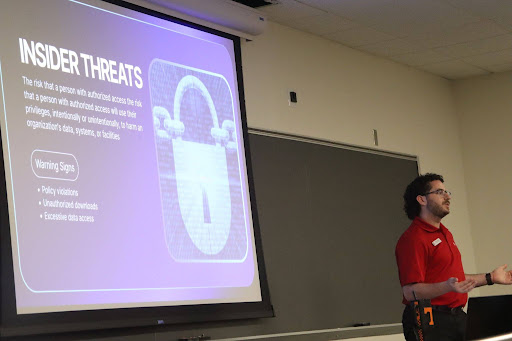
After returning to Georgetown University, interns transitioned into the classroom for an afternoon focused on security frameworks and project development. The first session introduced students to OPSEC—Operational Security—and its role in protecting sensitive information, preventing data leaks, and reducing organizational risk. Interns examined how OPSEC principles guide decision‑making in both government and private‑sector environments, emphasizing the importance of identifying critical information, analyzing potential vulnerabilities, and implementing safeguards to prevent exploitation. Students also reviewed the rubric and project deliverables that would shape their nonprofit consulting work throughout the week, learning how professional standards translate into actionable recommendations for real organizations.
Following a short break, interns shifted into a session titled A Day in the Life Of…, where they explored cybersecurity career roles through the lens of the CIA Triad—Confidentiality, Integrity, and Availability—and the expanding field of attack surface management. By examining how penetration testers, incident responders, forensic analysts, security consultants, and cybersecurity managers apply the CIA Triad in their daily responsibilities, students gained a clearer understanding of how foundational principles guide every decision made in the field. The session also introduced attack surface management as a critical practice for modern organizations, emphasizing the importance of continuously identifying, monitoring, and reducing the number of exposed digital assets that could be targeted by attackers. Interns learned how professionals map an organization’s external footprint, uncover shadow IT, and prioritize remediation efforts to minimize risk. Together, these concepts encouraged students to envision how their own strengths and interests may align with emerging roles in the cybersecurity workforce.

Throughout the afternoon, students rotated between sessions, ensuring each intern developed a strong conceptual understanding of cybersecurity principles and the professional pathways available within the industry. These experiences emphasized that cybersecurity is not merely a technical discipline—it requires ethical judgment, strategic thinking, clear communication, and the ability to collaborate across teams and sectors.

Later in the day, interns transitioned into worktime before beginning Lab 1: Terminus, an immersive simulation that placed students in the role of incident responders confronting a realistic cyberattack. Working under time constraints, interns analyzed digital evidence, investigated suspicious activity, and determined the appropriate steps to contain and respond to the unfolding incident. The simulation challenged students to prioritize tasks, identify patterns, and make informed decisions despite incomplete information—mirroring the pressures faced by cybersecurity professionals during real‑world incidents. The experience reinforced the importance of teamwork, methodical problem‑solving, and effective communication in high‑stakes environments.
As evening approached, interns walked to dinner and later explored Georgetown’s historic campus and surrounding neighborhood. These informal moments allowed students to strengthen connections with peers from across the country, building the collaborative community that would support them throughout the week’s consulting projects, laboratory exercises, and professional presentations.
By the conclusion of Monday, interns had already experienced the interdisciplinary nature of cybersecurity. Through government engagement, technical instruction, collaborative laboratories, and project development, students discovered that protecting digital systems requires far more than technical knowledge alone. Effective cybersecurity professionals must understand risk, communicate complex ideas clearly, collaborate across teams, and continually adapt to new challenges. Equipped with a strong technical foundation and an expanding network of peers and mentors, interns concluded their first full day prepared to take on the increasingly advanced cybersecurity concepts and consulting experiences awaiting them throughout the remainder of the internship.


Comments