_edited.png)
First Afternoon of the Criminal Law and Trial Internship

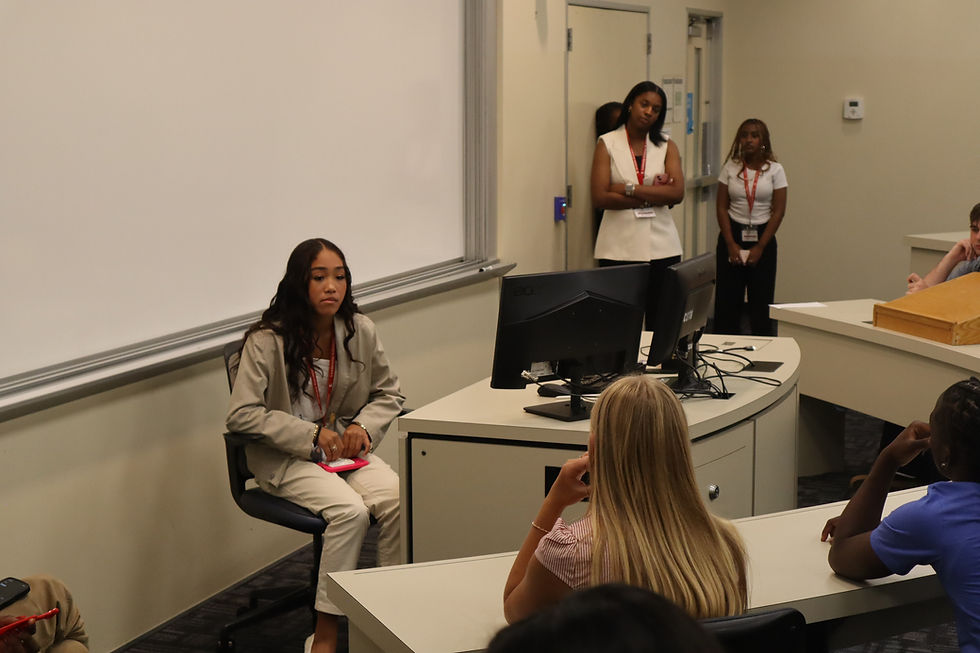
The first part of the Criminal Law and Trial Internship was about listening and learning; this afternoon was about doing, and our interns rose to the occasion in a big way. The session opened with a mock jury selection exercise, led and developed by our director, Jenna Sackter, who put interns directly into the seats of attorneys conducting voir dire. There is no substitute for actually standing up and questioning a jury pool: reading people, thinking on your feet, and making real-time judgment calls about who belongs in the box. Watching interns take that exercise seriously, sharpen their questions round after round, and start to develop an instinct for the process was a genuine highlight of the week so far.

From there, the afternoon shifted from practice to perspective, as interns received a lecture from Judge Adam Hunter. Hearing from a sitting judge is a different kind of education than hearing from an advocate; it offers a view from the bench of what judges are watching for, what persuades them, and what the practice of law looks like from the seat of the person ultimately weighing the arguments.

The day closed with what may have been its most powerful moment: a panel of previously incarcerated individuals sharing their own experiences with the criminal legal system directly with the interns. No lecture, no case study, and no mock exercise can replace hearing firsthand from people who have lived through incarceration and its aftermath. It is one thing to study sentencing law and reform policy in the abstract; it is another entirely to sit across from someone whose life was shaped by that system and to listen to what they want the next generation of advocates to understand. That kind of testimony has a way of grounding everything else the interns have learned this week in the stakes it was always about.
Our interns have already proven their hard work and dedication, moving fluidly from courtroom simulation to judicial insight to lived experience, and bringing the same focus and respect to each. Leadership Initiatives set out to build advocates who understand the legal system from every angle: as practitioners, as it appears from the bench, and as it is actually experienced by the people who move through it. Today, that vision came fully into view.


Comments